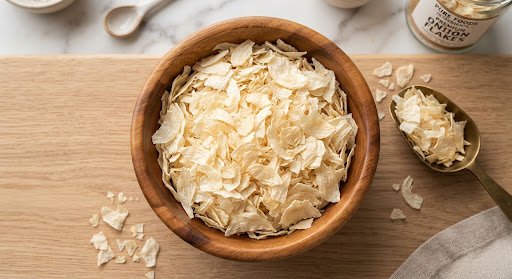
When sourcing dehydrated alliums for industrial food manufacturing, ingredient blenders and culinary formulators face a fundamental choice between white, red, and pink onion varieties. Each cultivar offers distinct pyruvic acid concentrations, solids content, and moisture retention parameters.
1. Dehydrated White Onion
White onions cultivate high natural solids (16–22% brix before dehydration), making them ideal for convective hot-air drying without excessive caramelized discoloration. They deliver a clean, sharp, yet rounded pungency that integrates seamlessly into cream soups, light gravies, and white spice blends.
2. Dehydrated Red Onion
Renowned for its deep crimson anthocyanin coloration, red onion is prized in snack coatings, pizza toppings, and barbecue rubs where visual appeal is as critical as flavor punch.
3. Dehydrated Pink Onion
Grown extensively across the fertile coastal microclimates of Saurashtra (Mahuva, Talaja, Bhavnagar), pink onions offer a robust aroma with exceptional pungency and value-in-use.
Key Sourcing Principle
Gujarat's Bhavnagar and Mahuva agro-belts produce onions with natural dry-matter Brix levels of 14% to 16%, compared to the 8% to 10% typical of Mediterranean or South American varieties. This delivers up to 20% higher flavor concentration per metric ton of finished product.